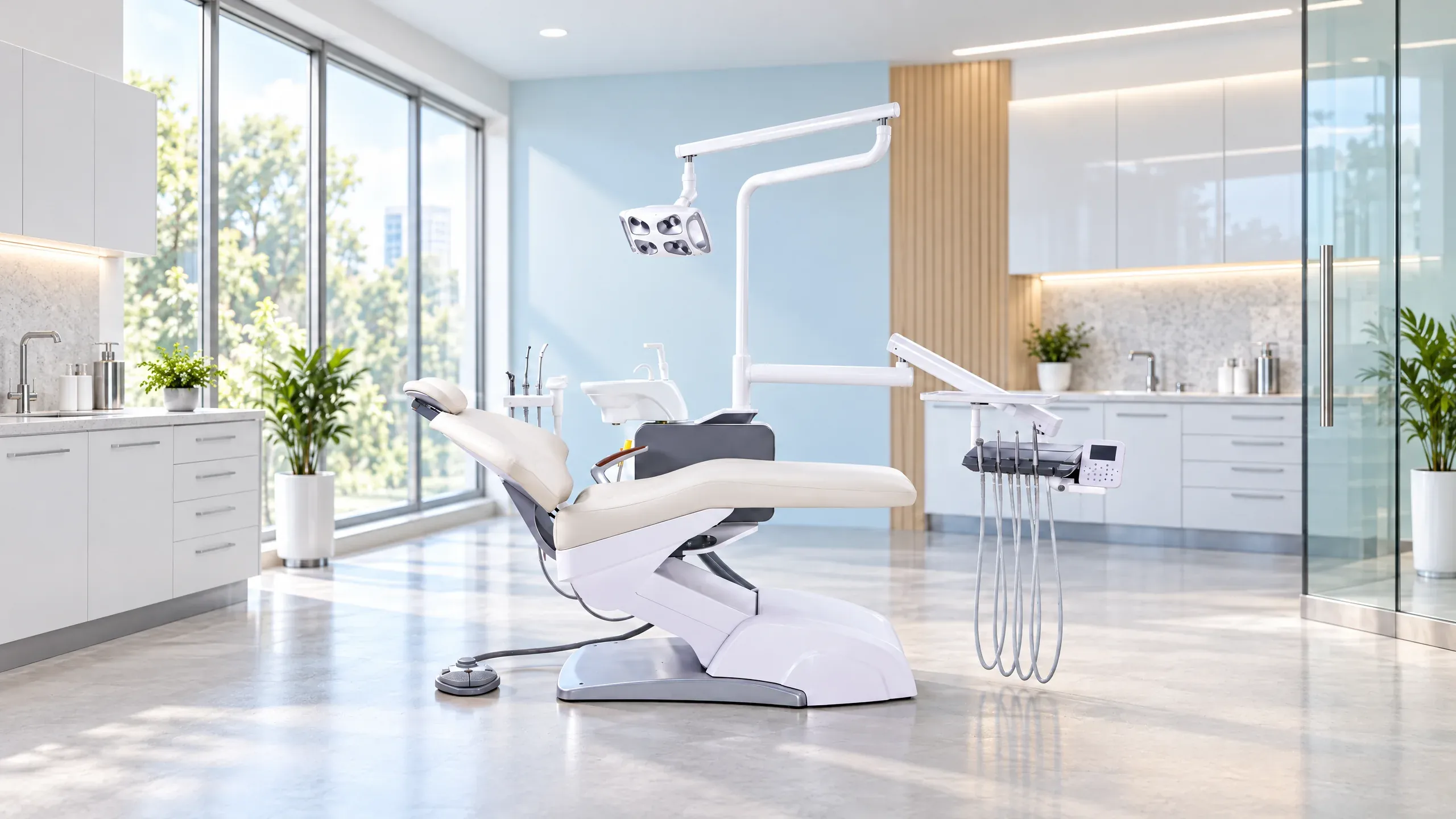
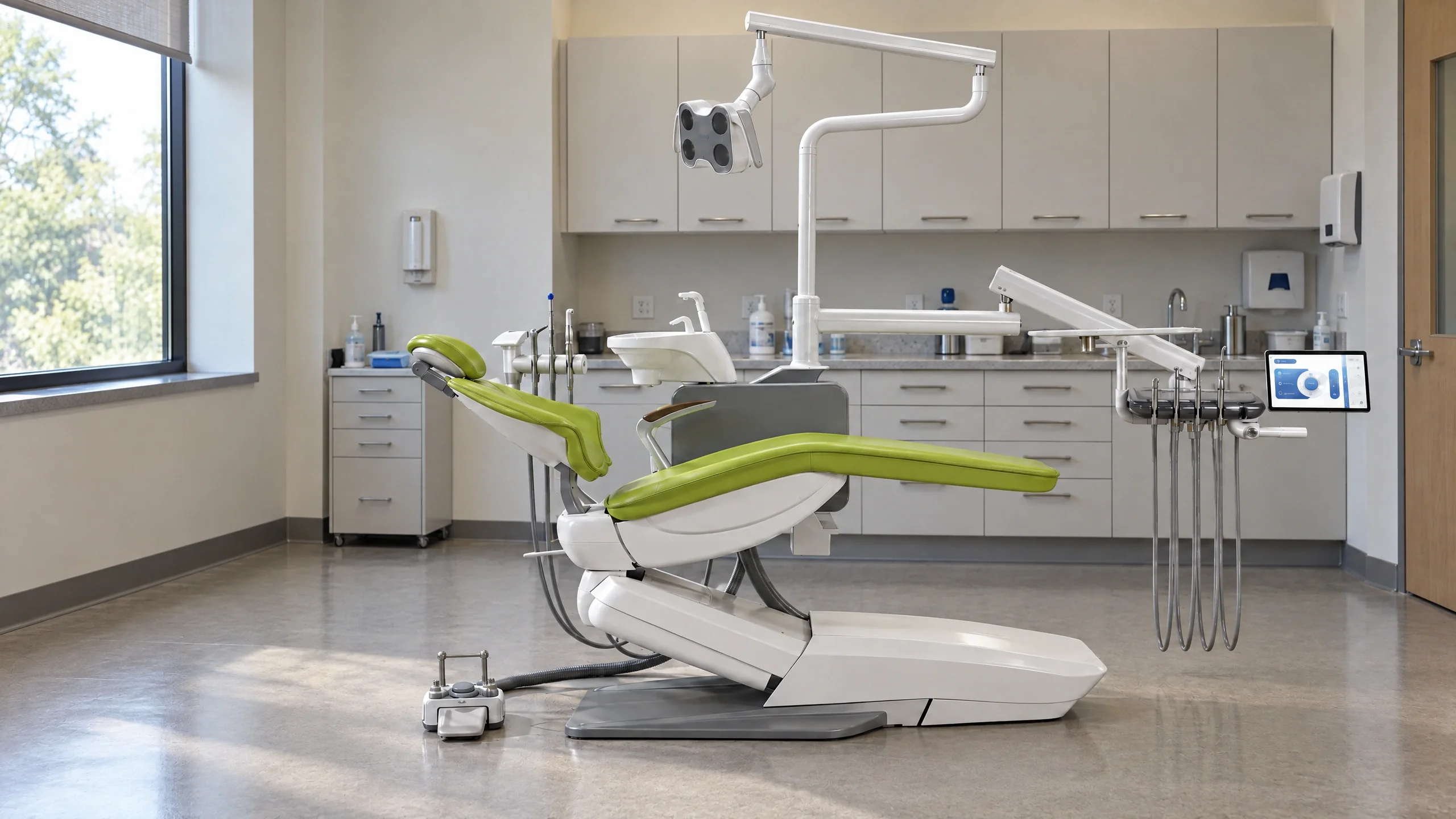
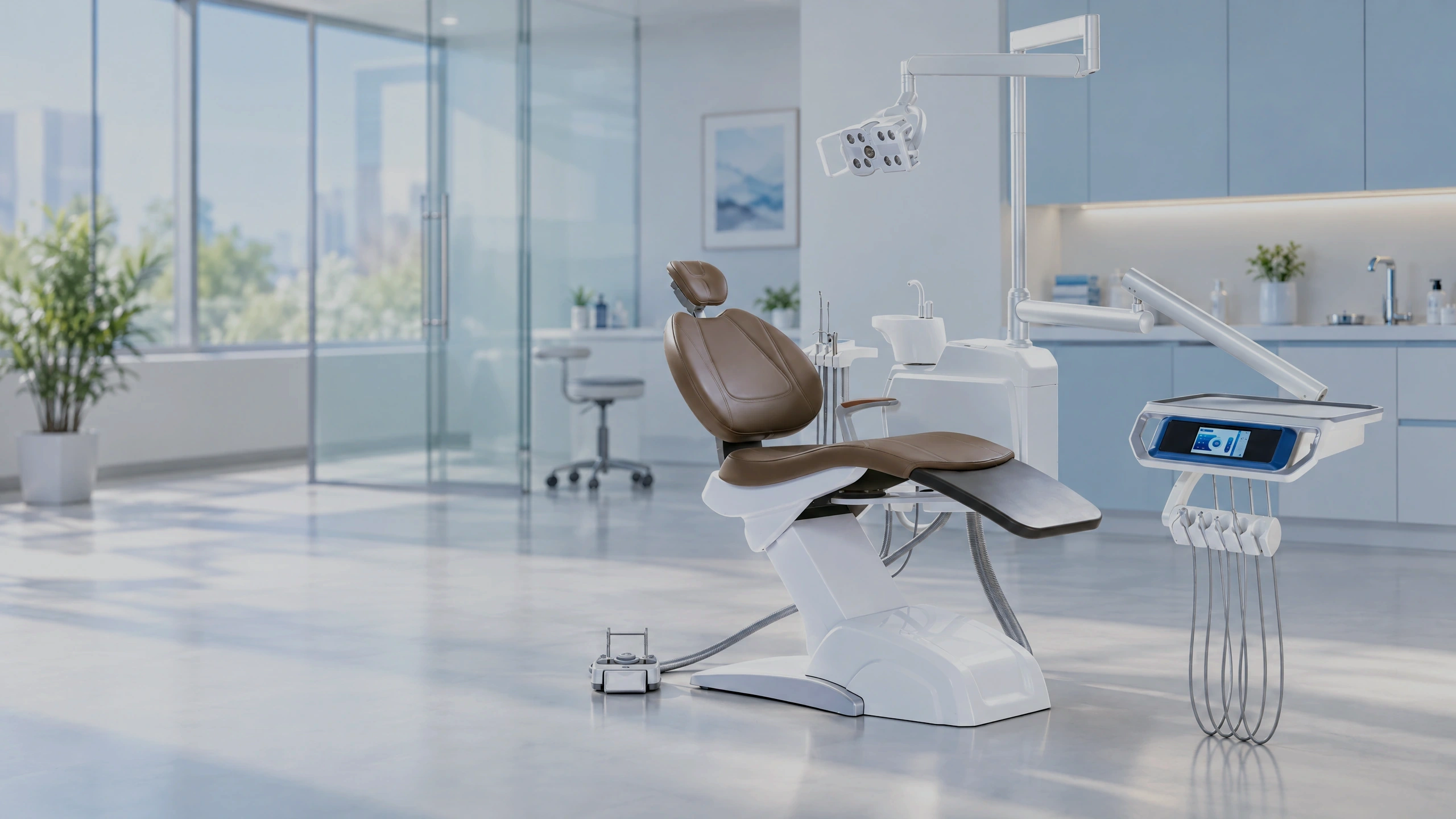

The types of dental chairs on the market can look confusing when you are buying for the first time, and comparing one dental chair price with another does not help much if the chairs are built differently. Two chairs can look almost identical in a photo and be very different in use. We are HealthPod, we supply dental equipment from Nairobi, and this is what we would want any clinic owner to understand before spending money.
In this guide:
- The types at a glance
- How the chair moves
- Which type fits your clinic
- 6 ways to choose
- Dental chair price: why we quote per clinic
- FAQs
Types of dental chairs at a glance
Dental chairs differ in four main ways: how the chair moves, whether the chair and instruments come as one setup, where the instruments sit, and which hand the dentist works with. There are also specialist chairs built for one kind of treatment. This table summarises the main types of dental chairs.
| Type | What it means | Worth considering if |
| Electric (electro-mechanical) | Motor-driven chair movement, usually controlled from a panel or foot control | You want smooth, controlled positioning |
| Hydraulic | Chair movement driven by fluid pressure | You have checked who services it and where spare parts come from |
| Integrated chair and unit | Chair, instrument delivery system, light and suction supplied as one setup | You are equipping a permanent surgery |
| Portable or mobile unit | Compact unit that can be moved between locations | You do outreach work or have very little space |
| Ambidextrous | Can be arranged for right- or left-handed dentists | More than one dentist will use the room |
| Specialist (for example paediatric or orthodontic) | Built around one kind of treatment | Your practice focuses on one specialty |
How the chair moves: electric or hydraulic
Most chairs move in one of two ways. Electric chairs use a motor and are usually controlled from a panel or a foot control. Hydraulic chairs move using fluid pressure. Both are used in clinics, so we would not tell you that one is simply better.
The question that matters more is what happens when something goes wrong. Ask who services the chair, whether spare parts are available, and how long a repair takes. A chair that is out of action stops your whole surgery.
One setup or separate pieces
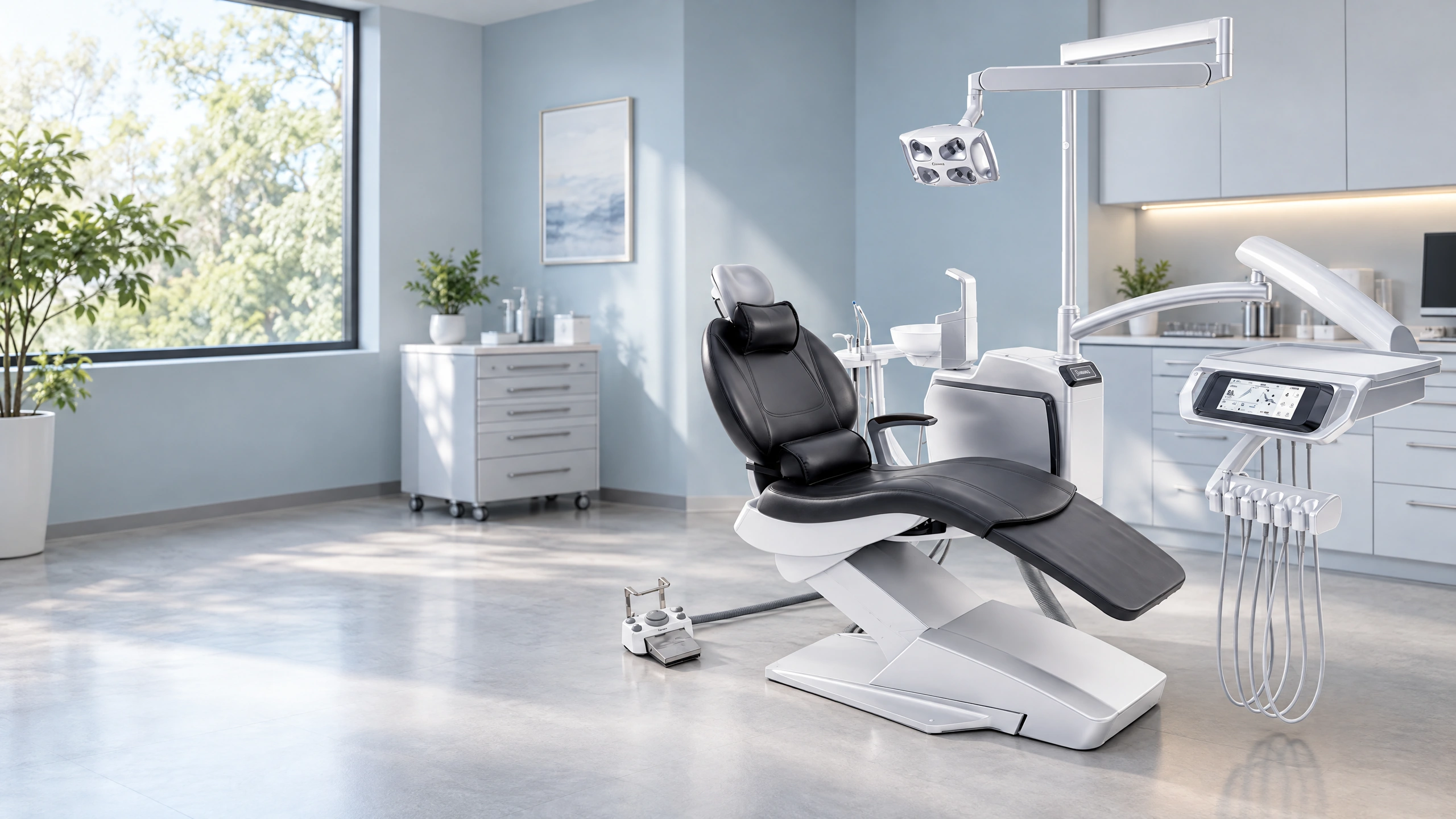
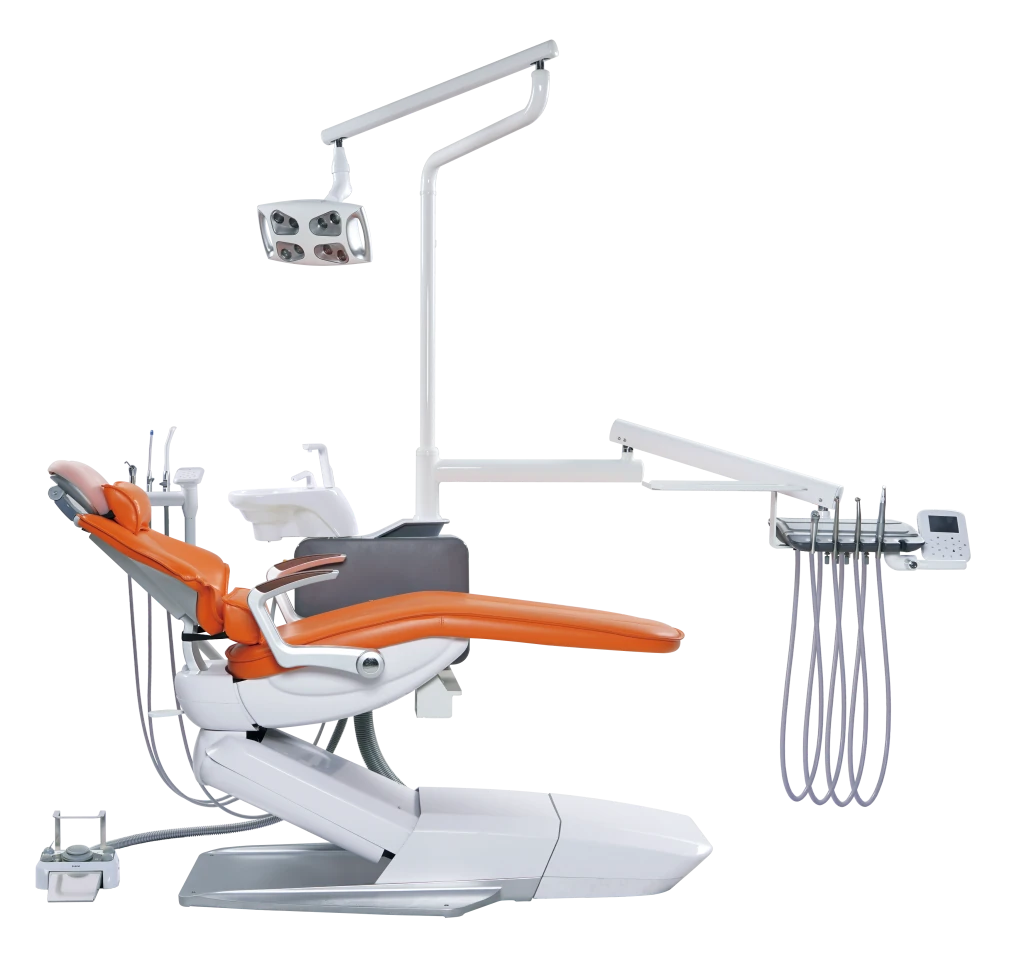
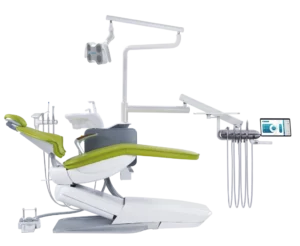
An integrated chair and unit comes as one setup: the patient chair, the instrument delivery system, the light and the suction, all arranged around the chair. That is the usual choice for a permanent surgery.
Portable units are built to be moved, so they suit outreach and mobile work. They are not meant to replace a full treatment room. If space is tight and you see only a few patients, talk to us before you buy. A conversation costs far less than the wrong purchase.
Integrated and portable setups are two of the most common types of dental chairs, and they suit very different clinics.
Where the instruments sit on different types of dental chairs
Some units hold the instrument tray above or across the patient. Others keep it at the dentist’s side or low on the unit. Neither layout is right for everyone. It depends on how your team works, how many people assist, and the shape of your room, so picture a normal procedure before you decide.
Handedness and specialist types of dental chairs
Some chairs can be set up for right- or left-handed dentists, and some are ambidextrous. If more than one dentist will use the room, check this before you order. Paediatric, orthodontic and surgical chairs exist for practices built around one kind of work. If your clinic does general dentistry, you probably do not need one.
Which of the types of dental chairs fits your clinic?
This is general guidance. Your own room and procedures should decide.
- A new permanent surgery: an integrated chair and unit is the usual starting point.
- Outreach, school or mobile clinics: a portable unit, accepting that it is not a full surgery.
- A shared room with several dentists: check for an ambidextrous setup.
- A practice focused on one specialty: consider a specialist chair.
- Not sure: send us your room size and procedures and we will help you narrow it down.
6 ways to choose the right dental chair
Use these six steps to decide between the types of dental chairs above.
- Measure the room. The chair needs space to recline fully, and your team needs space to move around it.
- List what you actually do. Check-ups, fillings and longer procedures ask different things of a chair.
- Think about who works at it. How many people are at the chair, and which hand does your dentist use?
- Check comfort and access. Look at upholstery, adjustability and how easily a patient with limited mobility can get in and out.
- Look at support, not just the chair. Think about year five as well as day one: who services it, and where do parts come from?
- Compare complete quotes. A low headline figure that leaves out instruments or installation can cost more in the end.
Dental chair price: why we quote per clinic, not one figure
People often ask us for a single price. We understand why, but a figure given without knowing your room or instruments is a guess, so we quote for each clinic. When you compare dental chair price in Kenya across suppliers, make sure each quote covers the same things:
- The model and how the chair moves
- The instrument delivery system and which instruments are included
- The operating light and accessories
- Upholstery
- Delivery and installation
- Warranty and after-sales support
Questions worth asking any supplier, including us
- What exactly is included in the price?
- How long is the warranty, and what does it cover?
- Are dental chair parts available locally, and how quickly can you supply them?
- Who installs it, and what does my room need first?
- Can I see the manufacturer’s datasheet?
Plan the air and the autoclave too
A chair is only one part of a working surgery. Your handpieces need clean, steady air, so look at a dental oil-free air compressor. Your instruments need reliable sterilisation, so see our horizontal vacuum autoclave sterilizer. It is far easier to plan these together than to discover on installation day that something is missing.
The SHINVA GRACE-D chairs we supply
If you are comparing dental chair brands, ask every supplier for the same things: the datasheet, the warranty terms and what is included in the quote.
We supply dental chairs and units from SHINVA, a medical equipment manufacturer. These GRACE-D models are all integrated types of dental chairs: each one pairs an adjustable patient chair with an integrated instrument delivery system. Ask us for the datasheet and we will go through how they differ.
- SHINVA GRACE-D XH509
- SHINVA GRACE-D XH507
- SHINVA GRACE-D XH505
- SHINVA GRACE-D XH501E
- SHINVA GRACE-D XH310
Frequently asked questions
What are the main types of dental chairs?
The main types of dental chairs differ by how they move (electric or hydraulic), whether they are an integrated chair and unit or a portable one, where the instruments sit, which hand they suit, and whether they are built for a specialty.
Which of the types of dental chairs suits a small clinic?
For a permanent surgery, an integrated chair and unit is the usual choice. Measure the room first, and ask any supplier about servicing and spare parts.
Is electric or hydraulic better?
Neither of these types of dental chairs is better in every case. Ask who will service the chair and how quickly parts can be supplied, because that matters more than the mechanism.
How much does a dental chair cost in Kenya?
There is no single dental chair price in Kenya, because it depends on the model, the instruments, the upholstery, and installation. We quote for each clinic. Compare complete quotes, not headline figures, and see our dental chairs and units for the range we supply.
What is the best dental chair for a clinic?
There is no single best dental chair. The best one is the one that fits your room, your procedures and your team, and that your supplier can service. Start with the six steps above, then compare complete quotes.
Can I choose the instruments and upholstery?
Yes. Contact us, and we will discuss the instruments and upholstery that suit your practice before you order.
Do you help with installation?
Installation requirements are part of the conversation when you enquire, so you know what your room needs before the chair arrives.
Talk to us before you buy
Not sure which of the types of dental chairs suits your clinic? Tell us your room size, the treatments you offer, and the instruments you like to use, and we will recommend a model and quote for it. You can find us at 158 James Gichuru, Lavington, Nairobi; call +254 714 041 111, or email info@healthpodmed.com.